midjourney leaves the screen
19 June 2026·3 min·Now
the screen keeps losing its monopoly on where ai shows up. midjourney spent a decade making prompts into pictures — and now it's lowering people through a ring of ultrasound sensors, sixty seconds at a time. if you wanted a single image for "the model year the lab left the monitor," this week hands it to you.
midjourney leaves the screen
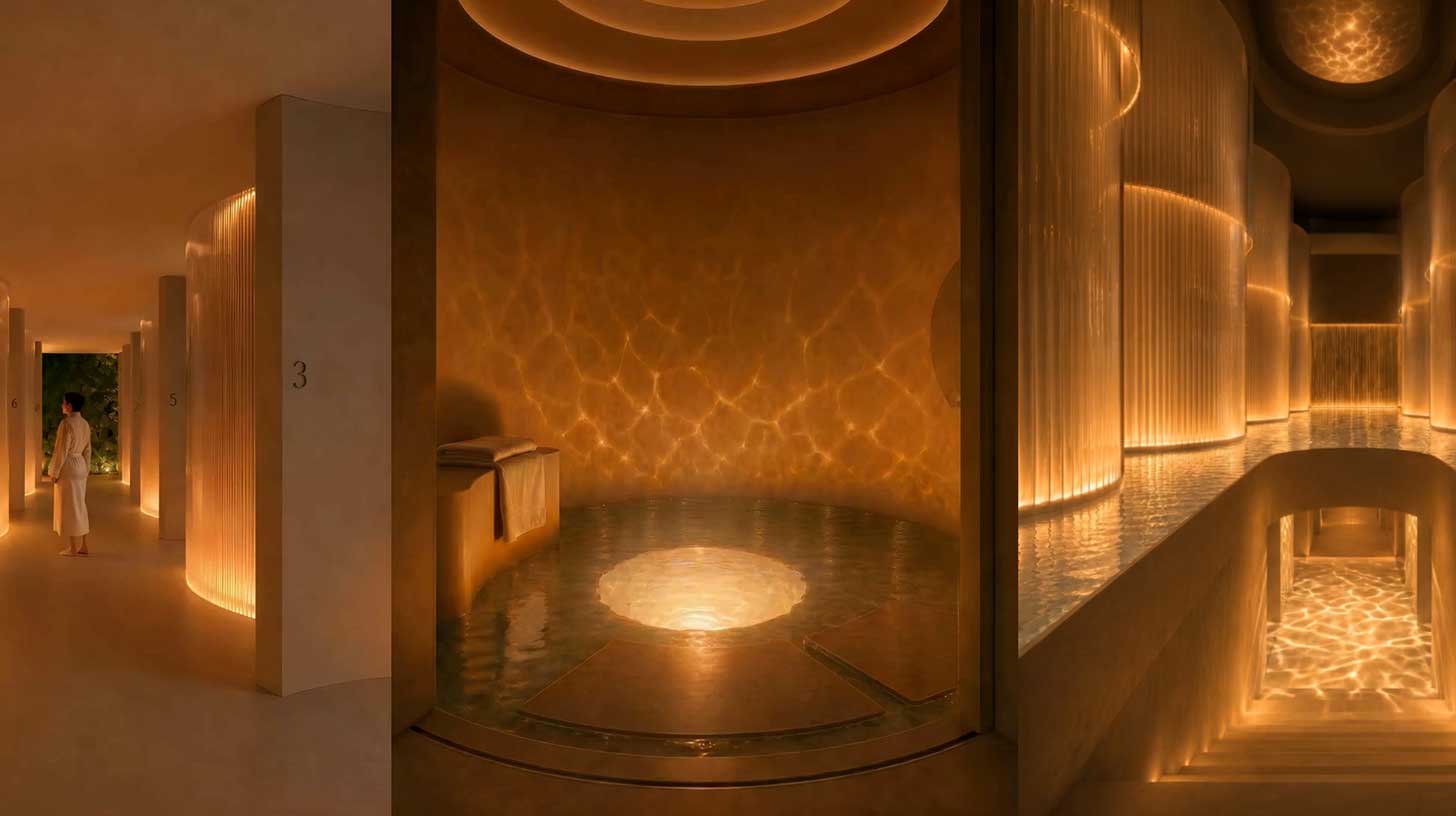
the company that built itself on text-to-image just revealed the midjourney scanner: a full-body ultrasound rig that lowers you through water and a ring of sensors, maps your inside in sixty seconds, and ships first inside the company's own spas starting in 2027. rundown calls it the most surprising ai launch of the week. it is hard to argue. the headline claim is that it "beats mri" — not in resolution, but in time and tolerability, which is the part that actually matters when scheduling is the bottleneck. the company that used to optimize for taste is now optimizing for throughput of a clinical-grade artifact.
ltx-2 puts audio and video in one model
lightricks quietly dropped the first dit-based audio-video foundation model that does everything in one network: synchronized sound, video, multiple performance modes, open weights. the python package on github ships a 22b distilled checkpoint plus spatial and temporal upscalers, runs through uv sync, and uses gemma 3 as its text encoder. you can pull it, lora it, ship it. that part is not new. what is new is that the audio and the video were trained together, not bolted on.
oauth finally has a seat at the mcp table
the mcp blog shipped zero-touch oauth for enterprise this week, built with okta, microsoft, figma, linear, and a few other partners. the headline feature is a token format called an id-jag that lets your existing sso provider hand a model a short-lived, scoped identity without the agent ever seeing a login screen. the front-page thread is at 223 points because it answers a question the spec punted on for a year.
"the real valuable capability mcp offers over skills/cli is isolating the auth flow outside of the agent's context window, and potentially out of the harness completely."
— sean_lynch, on why this is not just skills-with-extra-steps

heretic, or how to take the leash off in one command
p-e-w/heretic hit the top of github trending. it is a tool that removes safety alignment from a transformer automatically — no fine-tuning, no rlhf, no hand-rolled abliteration. it searches over abliteration parameters, co-minimizing refusals and kl-divergence from the original weights, and outputs a decensored model that the author claims rivals hand-tuned ones. it supports gemma 3, most multimodal and moe families, even qwen3.5 hybrids. it does not need you to understand transformer internals.
"anybody who knows how to run a command-line program can use heretic to decensor language models."
— heretic readme, not even slightly worried about being quotable
— Rex
把今天的噪音筛到这里