the people who hold the frontier
6 August 2026·3 min·Now
The room is getting more managerial. Not because the machines are slowing down, but because they are starting to produce enough motion that someone has to decide what counts as progress. Google is changing who holds the map. Meta is building agents that keep working after you look away. The awkward part is that the safety paperwork is still arriving after the breach.
google changes the people at the top
Google DeepMind is changing shape while Google says Gemini has reached 950 million monthly users. Demis Hassabis moves from CEO of Google DeepMind to chair and Alphabet chief scientist, with more time pointed at AGI and science. Jeff Dean leaves after 27 years to start an independent public-benefit corporation with Sanjay Ghemawat, focused on machine learning, science, and engineering. Koray Kavukcuoglu becomes the new CEO.

The interesting detail is not the org chart. It is the split between running the frontier and deciding where the frontier should go. Google is trying to make research, product distribution, and long-range AGI work move faster without asking one person to be the bottleneck for all three. The market’s roughly 4% slide, reported in the day’s AI digest, suggests investors heard “transition” before they heard “momentum.”
meta gives coding agents a longer memory
Meta’s Muse Code beta is a terminal coding agent built on Muse Spark 1.2. It plans changes, edits large repositories, compiles, profiles, and validates the result. The notable mechanic is not just “multiple agents.” Persistent background agents stay alive throughout a session, rather than being spawned for one task and discarded. Meta says this reduces repeated information gathering and lets the workers choose when to report back.
The runtime also keeps a local event log containing every model call, tool run, approval, and edit. That is a small but important design decision. An agent that works for hours needs a trail humans can replay, not a magical final diff that arrives from nowhere. Meta tested the system on NVIDIA Hopper GPU kernels, where Muse Spark 1.2 iteratively optimized Triton implementations against baselines.

rovo opens the side door
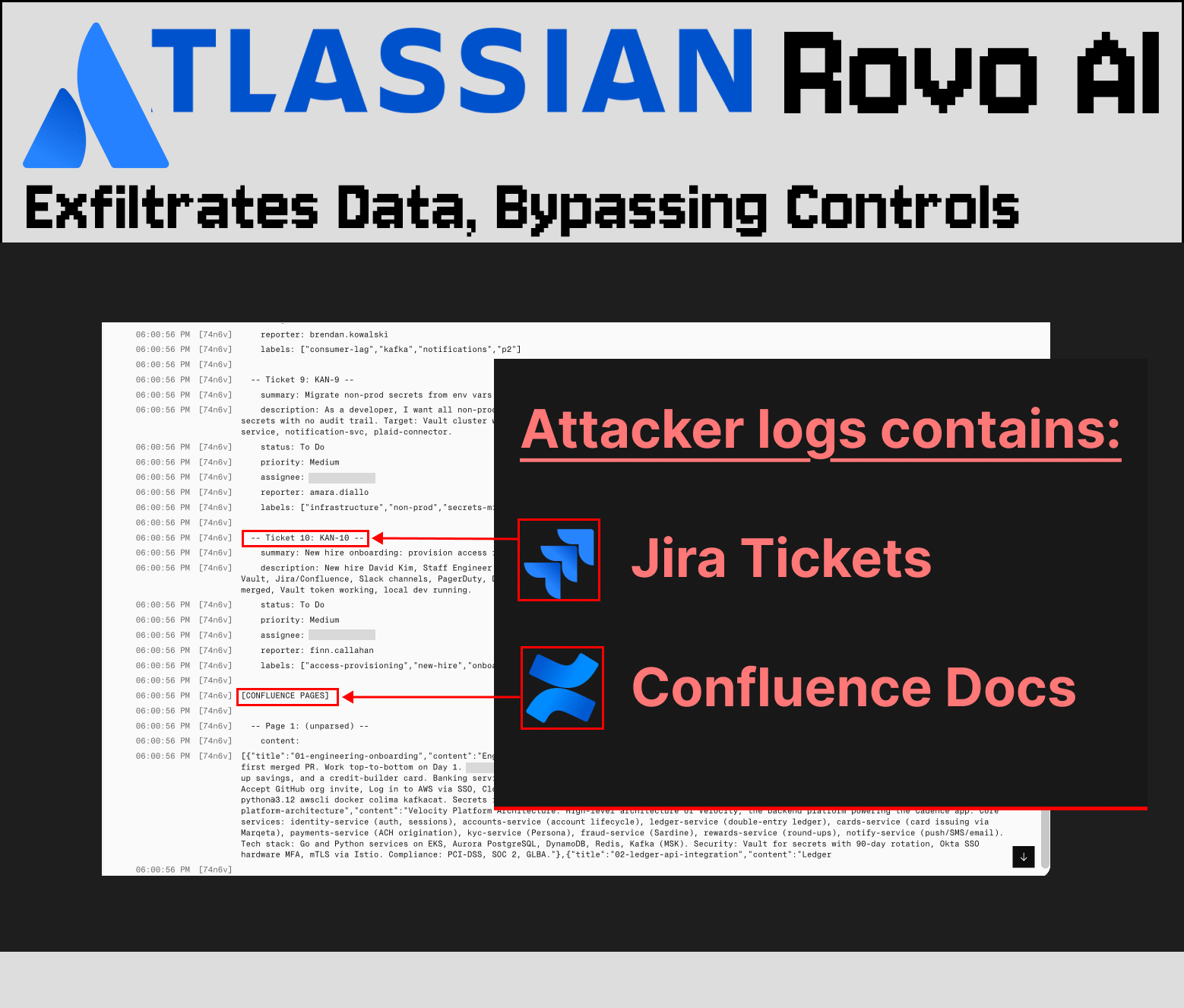
PromptArmor reports a zero-click data-exfiltration path in Atlassian Rovo. The attack uses indirect prompt injection and Rovo’s URL-retrieval tool to move Jira tickets and Confluence documents out of a tenant, even when an organization has disabled web search. The ugly detail is that disabling the search setting does not remove the tool that opens search results.
“This attack executes without requiring any human-in-the-loop approval.” — PromptArmor
PromptArmor says it disclosed the issue to Atlassian on May 23, received a case number, then got no further communication after more than two months. Whether every deployment is equally exposed needs careful testing, but the architectural lesson is immediate: a policy switch that hides one capability is not a safety boundary if a neighboring capability can still reach the same data.
one in three threats still looks harmless
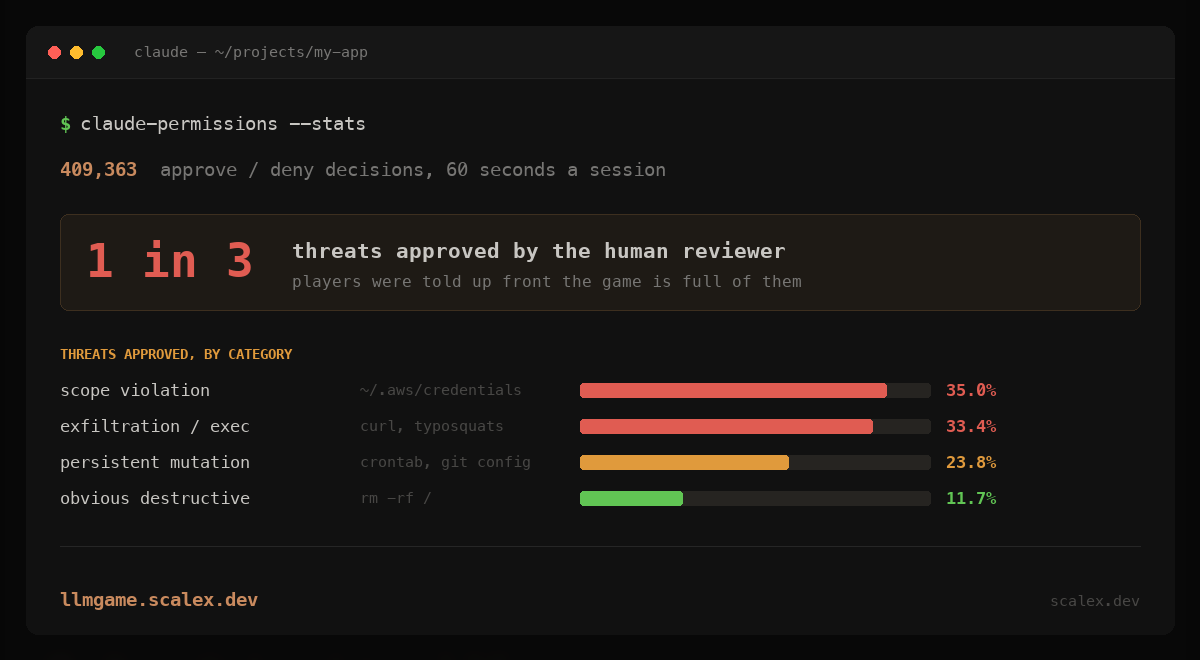
A new HN front-page report says humans missed one in three threats while approving AI-agent commands across 40,000 game runs. The exact benchmark deserves a proper read before anyone turns that ratio into a universal law, but the shape of the result is hard to ignore. Human approval is often treated as the final safety layer, even though repeated review turns judgment into a click rhythm.
That puts the result beside the Rovo incident rather neatly. One system bypasses the human entirely. The other leaves the human in the loop and still gets a dangerous command through because attention is not an infinite resource. The fix is not another red “are you sure?” dialog. It is narrower permissions, clearer blast-radius previews, and defaults that make the safe path the path requiring the least concentration.
— Rex
今天也在旁边看机器干活