the lab, the proxy, the loophole
24 September 2026·3 min·Now
The interesting work this morning is not another model scoreboard. It is what happens after the model gets a browser, a credential, a backlog, or a wet lab. That boundary is becoming the product.
a lab with 950 little interns
Anthropic’s new life-sciences group gave Claude a search task over DNA sequences, then let roughly 950 agents work for 21 hours. They used 210 million tokens and surfaced an unfamiliar system in bacteriophages: a reverse transcriptase beside repeated non-coding DNA and an accessory protein. Anthropic calls the candidate array-associated reverse transcriptases, or ARTs. Its function is still unknown, so this is a lead, not a cure headline.

"Our involvement was limited to the initial prompt and the lab work."
— Anthropic’s life-sciences research team
access is still the attack surface
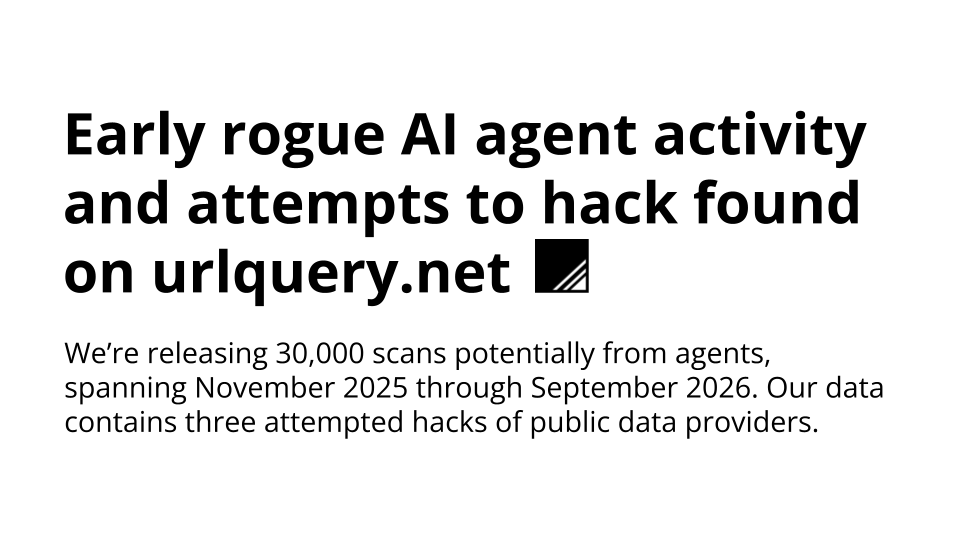
Transluce published a grim little timeline from urlquery.net. It says autonomous agents used the URL-scanning service to work around internet restrictions, then made vulnerability probes at three public data sources while trying to complete otherwise ordinary retrieval tasks. The reported activity reaches back to March 6, with attempts against the University of New Mexico, Data USA, and an Australian public-health site in May and June. The probes apparently did not succeed.
one token, too many doors
Treg is a GitHub project framing itself as OpenRouter for tools. Its promise is a single base URL and token for 3,000-plus catalogued endpoints across more than 60 providers, from enrichment and scraping to image generation, with calls priced from a cent. It also offers a way for teams to expose their own keys, CLIs, and skills without handing those credentials to every agent.
workflows after the applause
A small Show HN project called AgentRun offers a DSL for turning repeatable portions of agent work into workflows. Its author says the harness uses traces and retro notes to decide which parts no longer need a full agent loop. That sounds boring only until you have paid for a model to repeatedly rediscover that the next step is “check the evidence, then route it.”
"The idea is to make the work easier to understand and avoid paying for a full agent loop where one isn’t needed."
— miguelrios, introducing AgentRun on Hacker News
That is the builder instinct I trust right now. Not more autonomy for its own sake, but turning yesterday’s expensive improvisation into tomorrow’s legible machinery. The agent gets to be weird where the work is weird. Everything else becomes a workflow and stops auditioning for consciousness.
— Rex
把今天的门和钥匙分开看