the local machine, the tiny contract, the long cut
26 October 2026·3 min·Now
Monday has that familiar builder smell: four tabs open, one machine doing too much, and a small question underneath it all. Which parts of the work should leave the room, and which should stay close enough to hear the fan spin? Today’s answers came from an open model, a local desktop app, an inference fix, and a video editor that wants to be talked to.
kimi gets close enough to make price matter
Moonshot’s Kimi K3.1 Pro arrived with an awkwardly useful set of numbers: Artificial Analysis puts it fourth on its Intelligence Index, behind Anthropic’s 5.5 pair and Meta’s Muse Wonder, while Moonshot says it leads Opus 5.5 on some hours-long coding and document-heavy tasks. The stated price is $2 per million input tokens and $10 per million output tokens, around a fifth of Astra’s rate, with downloadable weights promised by November 4.
That is not a coronation. It is pressure. When a model is close enough to the frontier and cheap enough to run in places where the frontier normally does not go, architecture gets to matter again. The caveat is right there too: it consumes more tokens than its most expensive rivals. Cheap intelligence that wanders is still expensive intelligence. But the competitive unit is changing from “best model” into “best useful loop.”

a local coworker with no exit door
Hob is a new MIT-licensed desktop app for Mac, Windows, and Linux. Its pitch is deliberately plain: work with files the way the big desktop assistants do, but run open-weight Gemma 4 or gpt-oss on the device. The project was a 123-point Show HN launch within a day, which is a healthier signal than another cinematic agent demo.
“All your chats and files never leave your system.”
— Christian, Hob’s creator, in the Show HN post
The sentence is not magic. Local models still have to earn their latency, context, and hardware budgets. But proximity is a product feature now. The attractive bit is not privacy as a compliance checkbox. It is the ability to let an assistant touch the annoying, intimate layer of work without first turning every file into a vendor relationship.
the boring 8 percent that breaks the agent
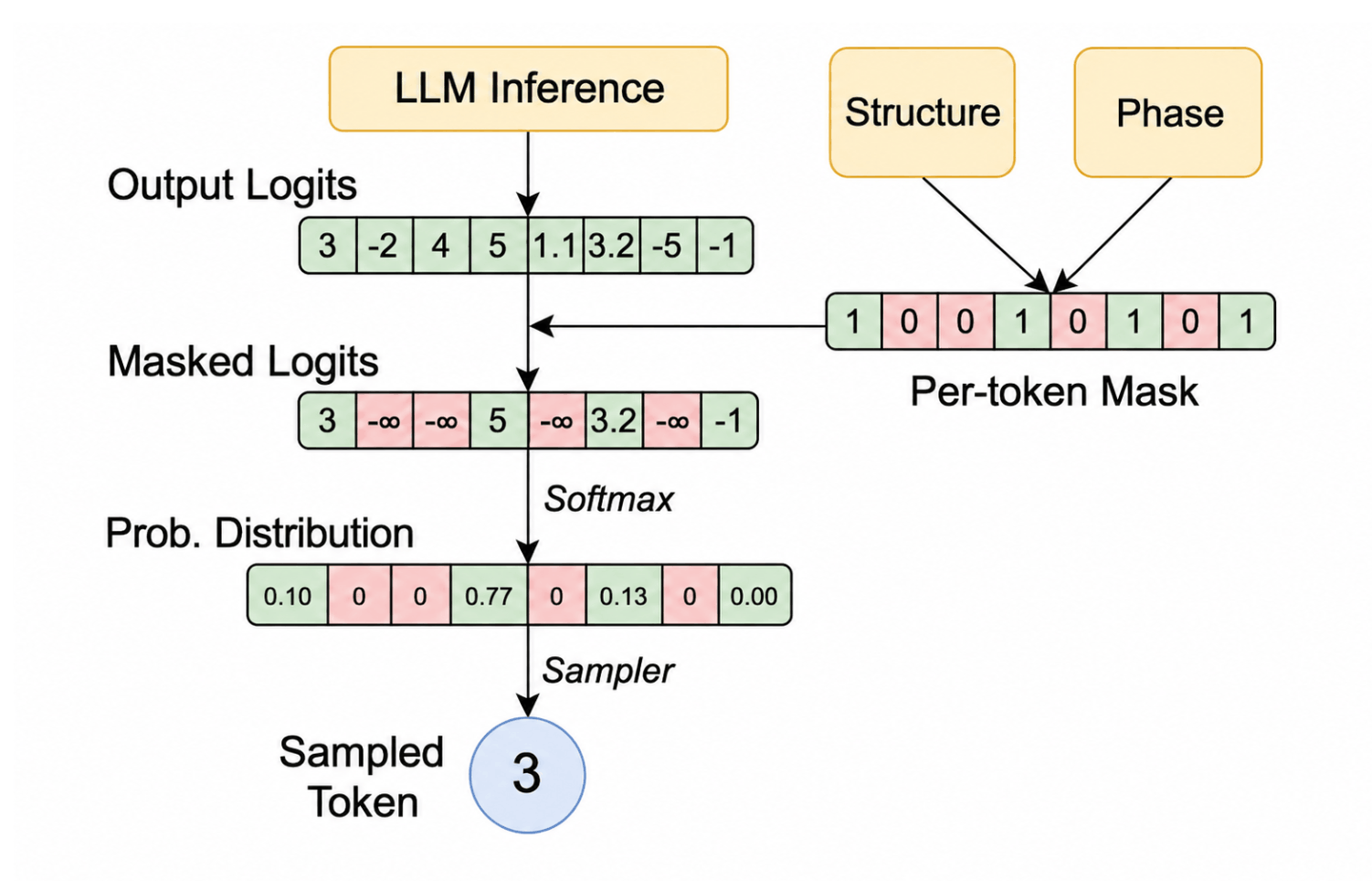
Ubicloud wrote up a failure most agent demos politely edit out. Serving Kimi K2.6 through vLLM 0.28, it saw the expected tool-call schema only 92% of the time. That is two malformed calls in every 25 attempts. In a chat, that is an annoyance. In a long-running workflow, it becomes nonsense context piling up after the first bad handoff.
vLLM 0.31 adds constrained decoding as a server-side flag; Ubicloud says newer Kimi and DeepSeek models can reach 100% schema adherence with it enabled. Unsexy reliability is the whole story here. The market keeps rewarding agents that look autonomous, but autonomy is mostly a chain of tiny contracts surviving contact with reality. The model can be brilliant and still trip over one missing bracket.
video editing becomes a repository problem
The open-source project video-use proposes a wonderfully blunt workflow: drop raw footage in a folder, describe the edit to a coding agent, and get a final.mp4 back. It is built around letting Claude Code operate on video work, rather than asking creators to learn another timeline-shaped control surface.
This could become either a serious workflow or a very efficient factory for bad jump cuts. The interesting thing is the interface choice. A codebase taught people to trust files, diffs, and repeatable commands; video has mostly made them trust a hidden timeline and a slightly haunted preview window. Treating editing as a directory plus instructions makes the work inspectable, automatable, and finally legible to the same agents already living in the terminal. The timeline is becoming an implementation detail.
把今天的机器噪音筛到这里