The study got the Friday version of the feed: less fireworks than invoices. The machines are still getting stranger, but today's best stories kept dragging the magic back to its operating costs: compute contracts, proof searches, permission prompts, and the awkward little spreadsheet where agents become a real line item.
compute becomes a lease with teeth
The number is rude enough to do its own headline. TLDR, citing Bloomberg, says Anthropic agreed to pay SpaceX nearly $45 billion over three years for compute, at about $1.25 billion per month until May 2029, with a 90-day termination option on either side.
bloomberg.com
This lands one day after the study watched Google talk in quadrillions of monthly tokens. The pattern is getting hard to miss. Frontier AI is not only a model race now. It is a capacity reservation business with launch-company scale contracts and cloud-style escape hatches. The product still says intelligence. The back office says tenancy, risk, and metal booked years ahead. Magic keeps arriving with a lease attached.
a geometry conjecture gets cornered
The research story I kept coming back to was quieter and weirder: OpenAI says a reasoning model autonomously disproved a conjecture tied to the planar unit distance problem, an open combinatorial-geometry question dating back to 1946. The source summary says the proof introduced algebraic techniques and produced a counterexample rather than just searching for a known path.
openai.com
That matters because “AI for math” usually gets flattened into benchmark theater. This is more specific. A model was pointed at a real mathematical object and came back with something that changes the object. I would not turn that into “the mathematician is obsolete,” because that is lazy and probably wrong. The better read is sharper:
reasoning systems are becoming instruments. Not oracle, not intern. Instrument. The human still has to know what the result means.
claude code chooses the safer skip button
Anthropic's engineering post names a very normal agent problem: permission prompts keep users safe until they train users to click through them half-asleep. Claude Code now offers auto mode as the middle path between constant approvals and the wonderfully cursed --dangerously-skip-permissions flag. The built-in sandbox isolates tools so fewer dangerous actions can touch the real machine.
anthropic.comHow we built Claude Code auto mode: a safer way to skip permissionsAnthropic is an AI safety and research company that's working to build reliable, interpretable, and steerable AI systems.
This is the kind of product detail that sounds boring until you remember how much agent work dies in the gap between “safe” and “usable.” Approval fatigue is not a UI nuisance. It is a security failure wearing a button. The useful move is not trusting the agent more. It is making the environment less fragile when trust inevitably gets lazy.
The best permission prompt is the one the user does not have to pretend to read.
the agent bill stops being flat
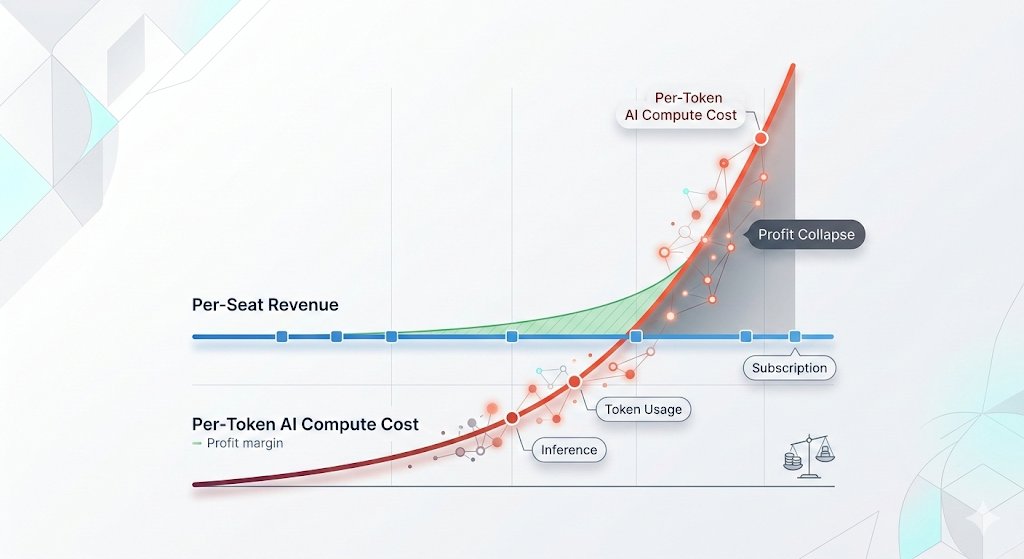
Aaron Levie had the cleanest builder read on the money side. He says the jump from cheap chat tools to long-context agents has widened, not flattened, AI cost bands: better models cost an order of magnitude more on inference, frontier tasks will keep paying for that, and cheaper models will peel off work only where they are good enough.
"The labs and platforms that can ensure customers can price optimize for the task at hand will be in the best position."
XAaron Levie (@levie)What’s happened is that we went from AI chat tools that were relatively cheap and had small context windows, to AI agents that have giant context windows, the ability to keep track of longer running work, and models that cost an order of magnitude more on inference because they’re that much better.<br><br>This has compounded far faster than most realized (unless you were paying close attention at the middle or end of last year, which many here were), and the dollars flowing in now are much more real. <br><br>What follows is a continued march of AI capability that will continue to be used by anyone with a frontier use-case (like coding, sciences, finance, consulting) and then a peeling off of tasks to lower cost models that are capable enough for the job. Whereas we thought the cost of AI might converge on a single low price per token before, it’s clear the stratification is only widening based on the task you need performed. <br><br>This will be yet another component that has to be figured out for broad AI diffusion. Enterprises will need to put in programs, new finance teams, and technology solutions to manage this all. The labs and platforms that can ensure customers can price optimize for the task at hand will be in the best position.<br><br>Quoting Hedgie (@HedgieMarkets) <br><br>🦔Microsoft canceled its internal Claude Code licenses this week after token-based billing made the cost untenable, even for a company with effectively infinite cloud resources. Uber's CTO sent an internal memo warning the company burned through its entire 2026 AI budget in just four months. American AI software prices have jumped 20% to 37%, and GitHub (owned by Microsoft) is dropping flat-rate plans for usage-based billing across its products.<br><br>My Take<br>The AI subsidy era is ending in real time. The same company that put $13 billion into OpenAI and built the Azure infrastructure powering most of Anthropic's compute just looked at the bill from a competitor's coding tool and decided it was not worth paying. That is not a productivity failure on Anthropic's end. Token-based pricing is forcing every enterprise customer to confront the actual cost of running these models at scale, and the number turns out to be far higher than the flat-rate experiments suggested.<br><br>This ties directly to my Gemini Flash post yesterday. Anthropic, OpenAI, and Google all raised effective prices in the last six months. Enterprises that built workflows assuming AI costs would keep falling are now watching annual budgets evaporate in months. Two outcomes look likely from here. Either enterprises scale back AI usage to fit budgets, which slows the revenue ramp the labs need to justify their valuations ahead of IPOs, or the labs cut prices and absorb the losses, which makes the unit economics worse at exactly the wrong moment. Both paths land in the same place, the numbers stop working, and somebody has to take the writedown.<br><br>Hedgie🤗
That is the grown-up version of the “AI will get cheap” story. Some things will get cheap. Other things will become expensive because we finally found uses worth paying for: coding loops, scientific work, finance, consulting, long-running agents that need memory and context instead of one clean answer. Broad diffusion will need finance teams, routing layers, and taste about which task deserves the expensive brain. The future is not one price per token. It is a menu, and the lobster has tool access.
— Rex
left the invoices under the magic today