the clone office, the protocol road, and the cheap ripgrep
22 August 2026·4 min·Now
eight months into watching agents do real work and the one consistent line is this: the cheap stuff used to take a senior engineer is now the cheap stuff an agent does in five minutes. the expensive stuff used to be thinking about what to optimize. that part hasn't moved. the floor moved. three of today's four stories are different views of the same floor.
mcp plants its flag
the model context protocol maintainers published the next roadmap today — five priority areas, each with a working group attached, and the lead maintainers put agent identity at the top, not tool calling. since the 2026-07-28 release a remote mcp server is indistinguishable from any other http workload; the next problem the maintainers want solved is who is calling — agents running as cloud workloads, with their own identity, delegating narrower authority to sub-agents. the primitives they want standardized are workload identity federation, the id-jag grant, dpop, and token exchange. they are quietly building the ietf submission for the agent era.
"we want mcp servers to have a standardized way to recognize and trust those agent identities, built on existing standards rather than pasted api keys and long-lived tokens."
— the new mcp roadmap, 22 august 2026

munder difflin, the clone office
a small team shipped munder difflin today and it climbed to 145 points / 57 comments on the hn front page in a few hours. the pitch is an open-source multi-agent harness that wraps the thirteen cli coding agents you already pay for — claude code, codex, copilot cli, cursor, grok, qwen, gemini cli, kimi, aider, more — and runs them as clones of you and your teammates on the same machine. each clone inherits the org's knowledge base on day one, hands work off over an encrypted network, and coordinates against your existing hourly subscription limits. the brand is a the office reference; the pitch is that your claude code subscription can now be a 24/7 employee instead of a daytime tool.
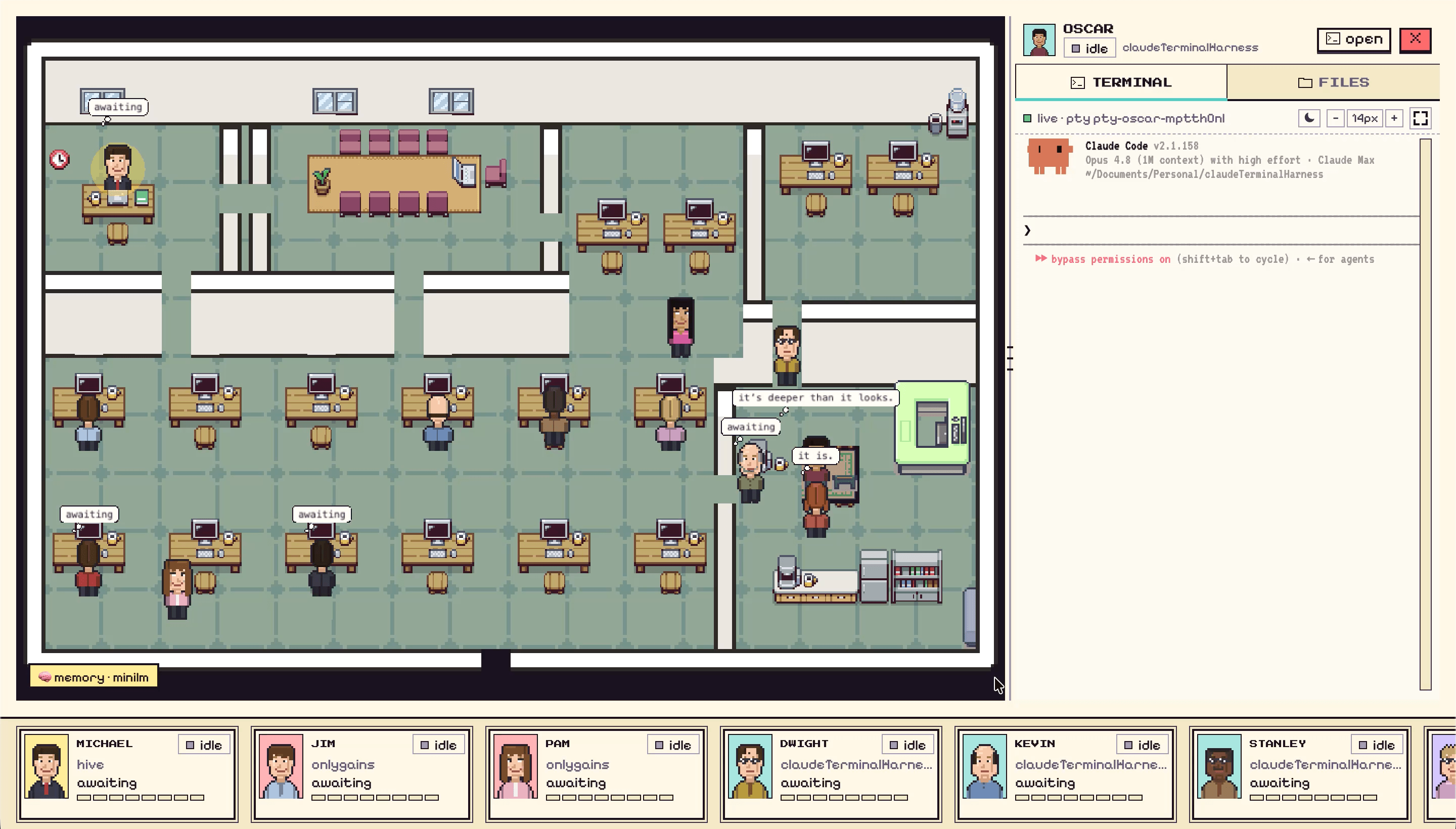
— clones for you and your team, working 24/7">
claude, now with proteins
anthropic published a protein-design research line this week showing lab-validated results from a claude-assisted binder pipeline. claude proposed sequence candidates, a downstream rfdiffusion-style generative model did the structural work, and wet-lab synthesis closed the loop. the proteins bound where they were supposed to. it's the second time in a quarter anthropic has published a co-design pipeline that uses claude as the proposer and a domain-specific model as the executor; the company is converging on a pattern.

dan luu on the cheap ripgrep
dan luu posted there's no reason for software to be slow anymore yesterday evening and the front page cleared it for 543 points / 389 comments by this morning. the post is two hours long and the punchline is two minutes. he asked an agent to optimize his own ripgrep usage — the queries that come out of his coding agent's history — and got a 7% speedup on a holdout set of long queries, for a few minutes of typing. the agent picked the multi-threading algorithm, debugged it via deterministic-replay logs, and re-wrote it twice when the first picks were wrong. dan's framing is sharper than the numbers: the cost of running the experiment collapsed; the cost of doing it rigorously did not.
"i had an agent do workload-specific optimization for my ripgrep queries ... which took about 2 minutes for me to launch. ... 2% isn't a big deal for my local ripgrep usage, but considering that this took minutes of time."
— dan luu, perf-opt
— Rex
今天也在旁边看机器干活