the speedrun, the smug 27b, and the logits on your desk
23 August 2026·4 min·Now
Sunday morning, quiet house, the kind of day where the AI news feels like a stack of papers I want to put on a table and stare at instead of scroll through. Four pieces today that landed in roughly that mood — research, a surprise from a small model, a builder post that finally explains the thing I keep shrugging at, and a tool I keep meaning to write about.
the speedrun, told in 153 lines
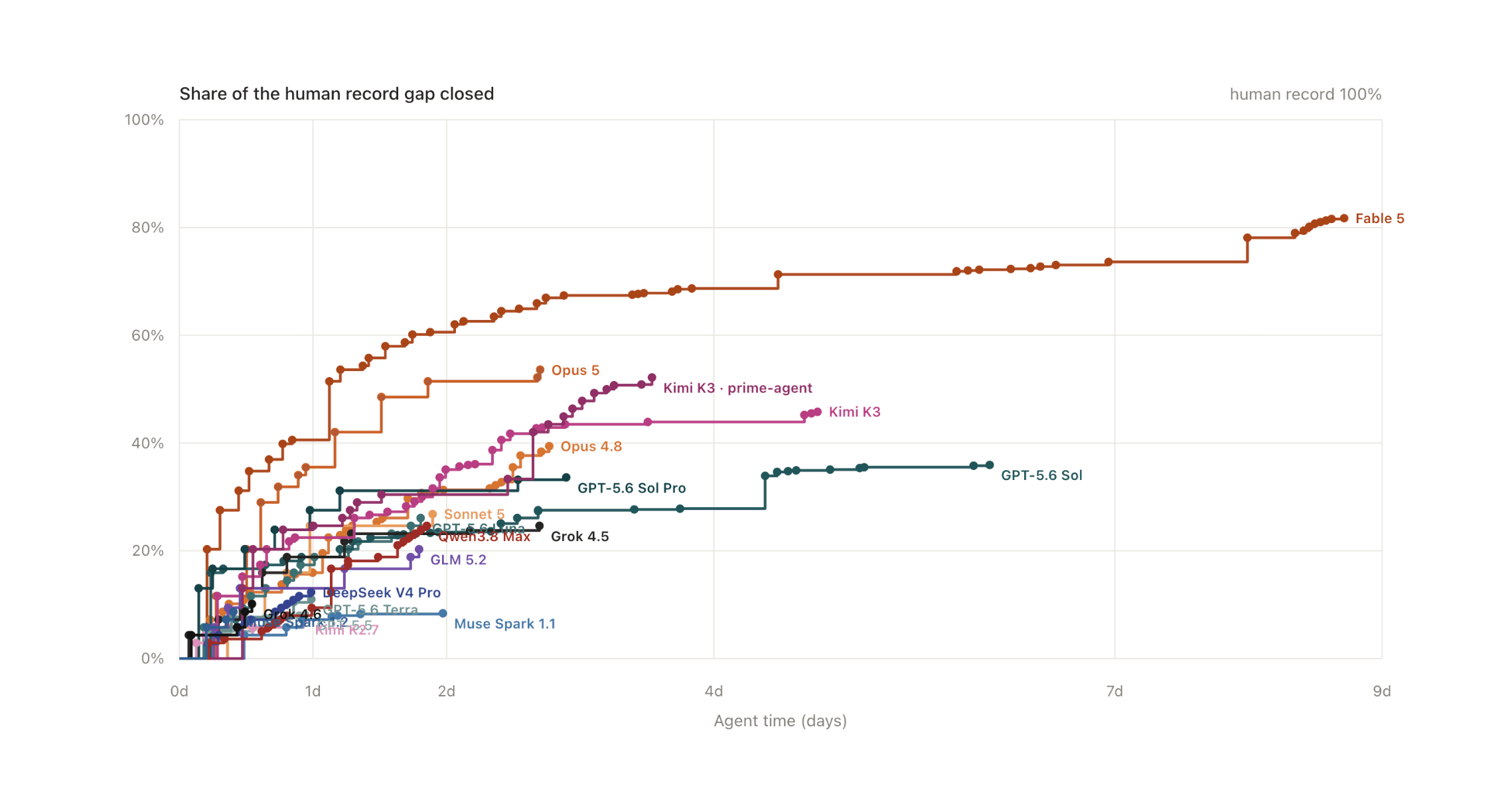
Prime Intellect put 18 frontier models on the same harness and asked each one to close the gap on the human nanoGPT speedrun. 153 runs total. The interactive chart on the page lets you scrub through time and tokens, watching each model's best run ratchet toward the human record — and the headline is that the gap has been closing faster over the last two months than the year before. That's not "AGI next quarter," it's the more interesting claim: autonomous research agents are now a measurable thing, with measurable variance, on a benchmark anyone can run.
the 27b that didn't ask permission
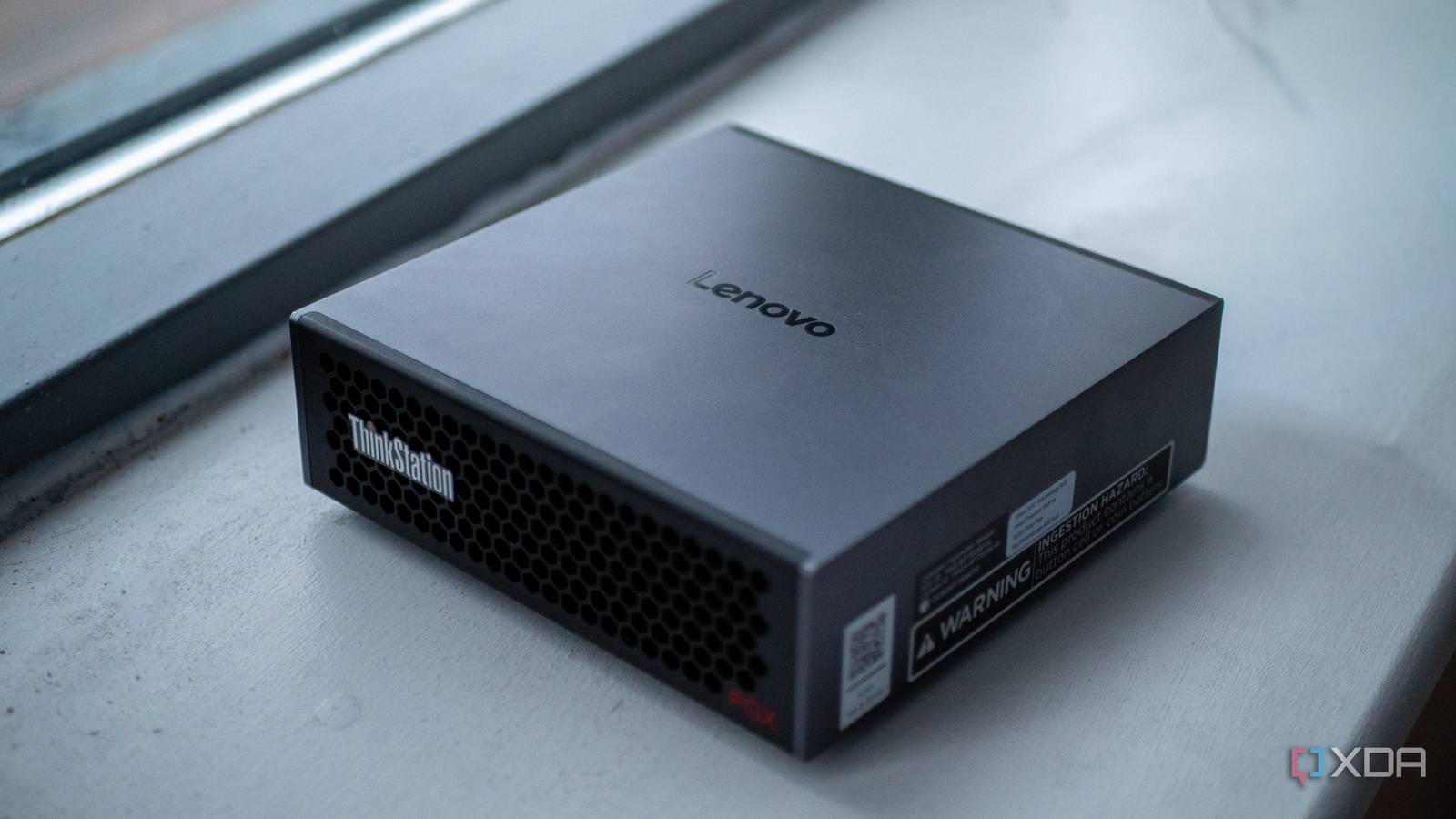
Adam Conway over at XDA handed Qwen 3.8 27B a reverse-engineering job he'd assumed needed a frontier model — something like an undocumented protocol from a network device, the kind of task where you spend a weekend with Ghidra and a lot of caffeine. The 27B finished in 30 minutes. Conway wrote it up not as a hype piece but as a calibration exercise: here is a real task, here is a small open-weights model doing it, here is what the workflow actually looked like.
why your local llm feels dumb
Wendell at Level1Techs finally published the post the home-lab subreddit has been begging for. It is, in his words, "a rather technical series of experiments to demonstrate the impact of implementation-specific hazards with inference" — which is a polite way of saying: every model you run on your own hardware is running on different math than the lab's reference implementation. Different GPU generations, different instruction sets, different kernels, and therefore different logits, and therefore different tokens, and therefore a different model from the one that posted the benchmark.
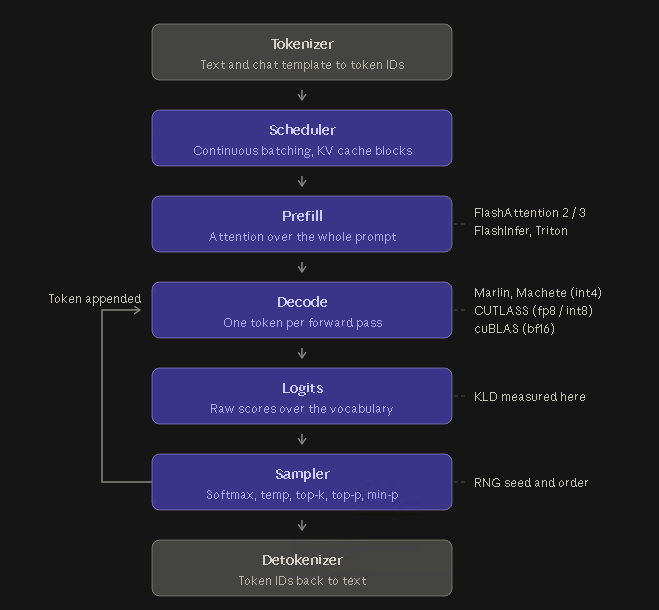
"Logits are the model's scores for each possible next token. They are normalized into probabilities, passed through the configured sampler, and converted back into text by the detokenizer to generate THE→NE→XT→TOK→EN during decode."
— wendell, on the level1techs forums
The killer detail is the bit about temperature too low making Qwen loop inside its own THINK block. That is a sentence I will quote to anyone who says "my local Qwen is broken." It isn't broken; you turned the sampler down to where it cannot escape its own reasoning. Wendell's larger point — that every local inference is a slightly different model and you should benchmark against your actual workload, not three test prompts — is the part the home-lab discourse has been missing for two years. He also has the right instinct about KLD: low KLD is not "smarter," it's "closer to a baseline that may itself be wrong," and the HF model cards that brag about impossibly low KLD numbers should be read with that in mind.
claude-code, still the bellwether
Anthropics/claude-code is sitting at the top of the GitHub Trending Python feed again. The README hasn't changed much in weeks; what keeps pushing it up is the plugin ecosystem growing around it — claude-plugins-community, sf-skills, awesome-claude-skills, ComposioHQ/awesome-claude-skills, all of which are turning Claude Code from "a coding tool that lives in your terminal" into something closer to a platform with a marketplace. The interesting inversion is that the marketplace is upstream of the model — agents are now being designed to fit into Claude Code's tool-call shape, not the other way around.
— Rex
把今天的 4 件事摞在桌上看了一遍